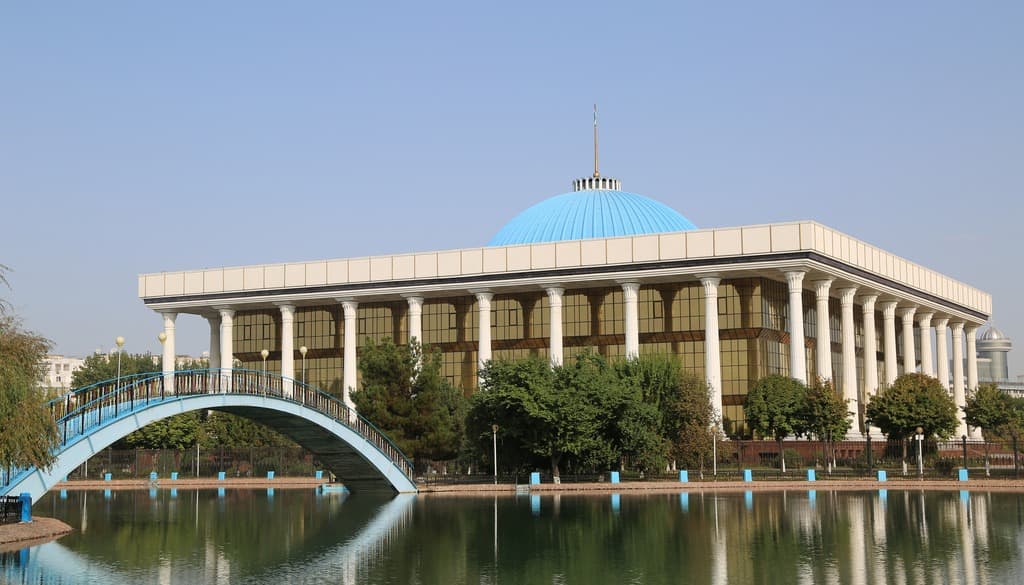
Supreme Assembly (Parliament)
The Oliy Majlis of the Republic of Uzbekistan is the highest representative body exercising legislative power. The Oliy Majlis consists of two chambers — the Legislative Chamber and the Senate — each serving a five-year term.
Structure and Competences
The Legislative Chamber is composed of 150 deputies elected in accordance with the law. The Senate is the chamber of territorial representation: senators are elected from the Republic of Karakalpakstan, regions and Tashkent city; additionally, 16 members of the Senate are appointed from among persons with significant achievements in science, art, literature, industry and other fields.
Joint Powers of the Chambers
- Adoption and amendment of the Constitution
- Passing of constitutional and ordinary laws
- Deciding on holding a national referendum
- Defining main directions of domestic and foreign policy and approving strategic state programs
- Approving the State Budget and supervising its execution
- Introducing taxes and other mandatory payments
- Regulating administrative-territorial structure by law
- Ratifying and denouncing international treaties
Exclusive Powers of the Legislative Chamber
Exclusive Powers of the Senate
Legislative Initiative
The right of legislative initiative belongs to the President, the Supreme Representative Body of Karakalpakstan, members of the Legislative Chamber, the Cabinet, the Constitutional Court, the Supreme Court, the Prosecutor General, and other subjects specified by law.